


.png "Durable Lightweight Spinner Luggage")




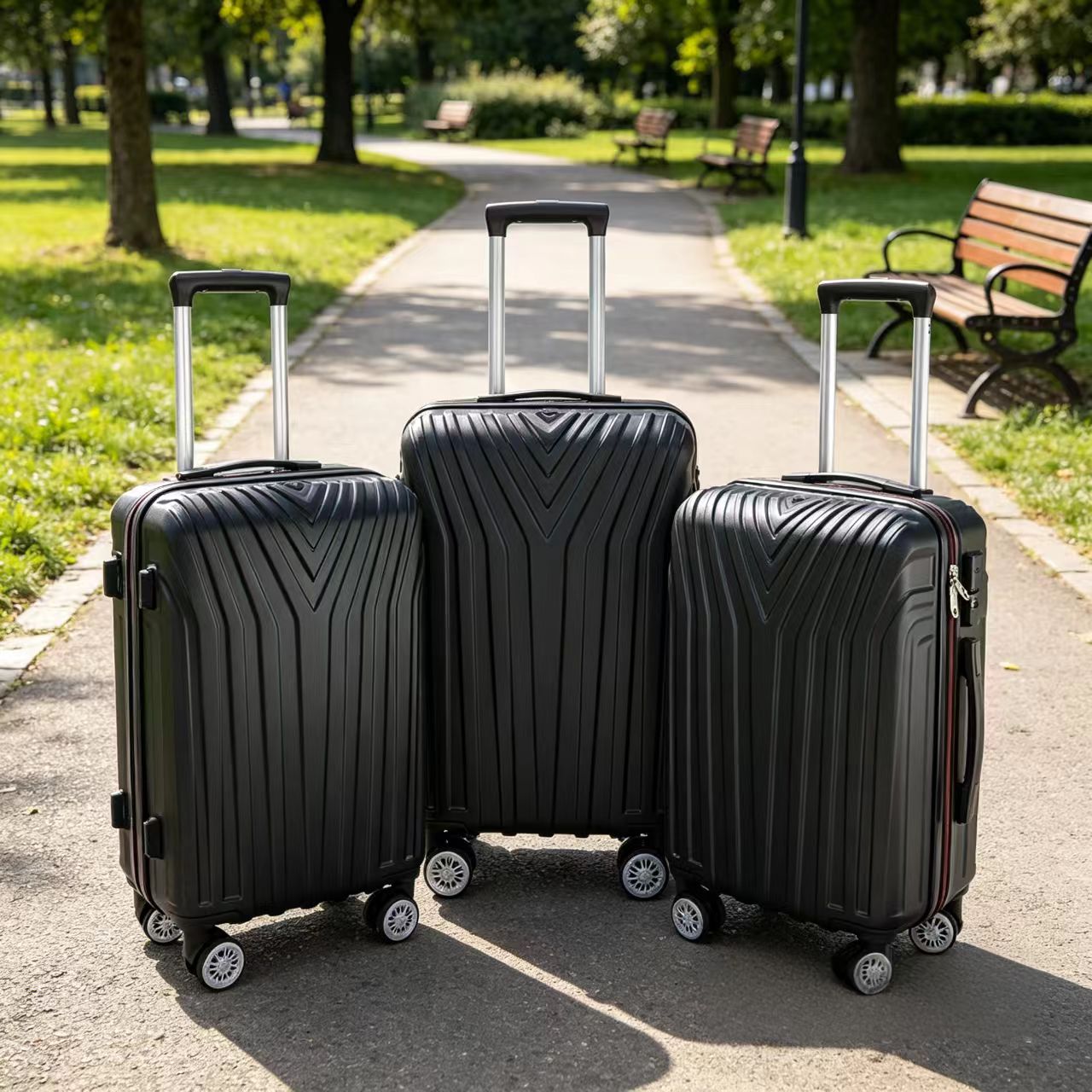
How to Avoid Production and Shipping Delays When Sourcing Luggage from China
Shipping delays can be costly for luggage brands, importers, wholesalers, and retailers.
A shipment arriving several weeks late can mean more than an inconvenient logistics schedule. It may cause a buyer to miss a seasonal sales window, delay a product launch, run out of a best-selling SKU, or fail to deliver to retail customers on time.
Some delays happen during international transportation and are outside a factory's direct control.
However, many shipment problems begin much earlier—during product development, material preparation, sample approval, production planning, customization, and quality control.
For B2B luggage buyers, avoiding delays therefore starts long before the container reaches the port.
When working with an OEM hard shell luggage manufacturer China, buyers should evaluate not only product price and appearance but also how the factory manages specifications, materials, production processes, quality control, and communication.
A reliable delivery schedule begins with a well-managed production plan.
Why Do Luggage Orders Get Delayed?
A suitcase may look like a relatively simple finished product, but manufacturing one involves many individual materials and components.
Depending on the model, these can include:
ABS or polycarbonate shell material
Wheels
Trolley systems
Handles
Zippers
TSA locks
Interior lining
Dividers and pockets
Logos
Customized accessories
Packaging
Colors and surface finishes
When an OEM or private-label luggage collection includes several sizes, several colors, and customized details, the number of variables increases significantly.
Common causes of production delays include:
Product specifications being confirmed too late
Multiple sample revisions
Design changes after sample approval
Customized components requiring additional preparation
Special colors or surface treatments taking longer to arrange
Packaging artwork being approved late
Incorrect or incomplete SKU forecasts
Production being scheduled too close to the required shipment date
Quality issues being discovered only at the final stage
Slow communication between buyer and manufacturer
Peak-season capacity pressure
The most important principle is simple:
Do not wait until an order is late to begin managing the risk of delay.
Delay prevention should start before mass production begins.
1. Finalize Product Specifications Before Production
One of the most effective ways to reduce manufacturing delays is to confirm product specifications as early as possible.
Before mass production, buyers should finalize:
Suitcase sizes
Shell material
Color
Surface finish
Shell construction
Target product weight
Wheels
Trolley system
Handles
Zippers
TSA lock
Interior design
Logo position and method
Packaging
Carton requirements
If specifications change repeatedly after materials have already been ordered or production has begun, the manufacturer may need to rearrange components, purchase new materials, remake parts, or adjust the production schedule.
This is especially important when working with a custom luggage manufacturer.
Customization creates product differentiation, but every customized decision also introduces another item that must be confirmed before production can move efficiently.
The earlier those decisions are finalized, the lower the risk of preventable delays.
2. Treat Sample Approval as Part of the Production Timeline
Sample development is not separate from delivery planning.
It is part of the delivery timeline.
A sample may need revisions for dimensions, colors, logo placement, wheels, trolley operation, zipper details, lining, locks, surface finishes, or packaging.
If several rounds of changes are required, final approval can move later than originally expected—and the mass-production schedule may move with it.
When sourcing from an OEM hard shell luggage manufacturer China, buyers can improve efficiency by giving consolidated sample feedback rather than sending new changes over several days.
A good sample review should evaluate the complete product at the same time:
Appearance
Dimensions
Shell
Color
Surface treatment
Wheels
Trolley
Handles
Zippers
TSA lock
Interior
Logo
Packaging
Overall workmanship
A useful rule for buyers is:
Do not approve only what the suitcase looks like. Approve how the entire suitcase works.
3. Confirm Material Requirements Early
Raw-material preparation can have a direct impact on production lead time.
Standard materials, existing colors, and commonly used accessories may be easier to arrange.
Customized colors, special surface effects, unique accessories, branded components, and customer-specific packaging may require additional preparation.
For example, when working with a polycarbonate suitcase supplier, buyers should confirm the required PC material, color, surface treatment, size assortment, and related components before expecting an accurate production plan.
This becomes even more important when one collection contains:
Multiple suitcase sizes
Several colors
Different interiors
Customized logos
Special packaging
At Jiangxi Travel Luggage Factory, raw-material control begins when materials enter the factory. We use high-quality imported raw materials with a focus on lightweight construction, strength, resilience, and consistent product quality.
Early confirmation allows the manufacturing team to prepare the correct materials before mass production rather than solving shortages after production has already started.
4. Understand the Real Lead Time of Customized Components
Customization is one of the main ways luggage brands differentiate themselves.
But customization also affects production planning.
A standard product using an existing configuration may be much easier to schedule than a suitcase requiring customized:
Shell colors
Surface textures
Logo treatments
Zipper pullers
Wheels
Handles
Interior lining
Accessories
Cartons
Retail packaging
For a custom suitcase manufacturer, every customized element may involve an additional material, supplier, approval, production process, or quality-control checkpoint.
This does not mean buyers should reduce customization.
It means they should separate customization into two categories:
Essential differentiation:
Features that genuinely help the product or brand stand out.
Unnecessary complexity:
Changes that add production time without creating meaningful customer value.
The best custom luggage programs focus resources on the first category.
5. Plan Backward From the Required Arrival Date
A common sourcing mistake is to think only about the factory's production time.
The buyer should instead begin with the date the goods must arrive at the warehouse and work backward.
A simplified planning sequence looks like this:
Required warehouse arrival date
← Local delivery and customs clearance
← International transportation
← Export and loading preparation
← Final inspection
← Mass production
← Material preparation
← Sample approval
← Final product confirmation
This approach gives buyers a more realistic view of the total sourcing timeline.
If a collection needs to arrive before a major promotion, holiday, travel season, or product launch, additional buffer time should be included.
Waiting until demand is already strong before placing an order can create unnecessary pressure on manufacturing capacity and transportation schedules.
A slightly earlier inventory position may sometimes cost less than missing an important sales period.
6. Give the Factory an Accurate SKU Breakdown
Total order quantity alone does not tell a manufacturer how complex an order will be.
For example:
3,000 pieces of one size in one color
is very different from:
3,000 pieces across three sizes, five colors, different interiors, and customized packaging.
Both orders contain 3,000 pieces, but their production requirements are not the same.
This is particularly important when sourcing larger suitcase sizes through a checked luggage OEM factory.
Checked luggage uses different quantities of shell material, packaging space, and components from carry-on luggage.
Buyers should therefore provide an accurate breakdown showing:
Size
Color
Quantity per SKU
Material
Accessories
Packaging
Customization requirements
The earlier the factory understands the complete assortment, the more accurately it can evaluate production arrangements.
7. Build Quality Control Into Production
Quality control should not begin one day before shipment.
If a major issue is discovered only during final inspection, the factory may need additional time for:
Sorting
Reworking
Replacing components
Reproducing products
That can directly affect the shipment schedule.
A better approach is to identify problems while production is still underway.
At Jiangxi Travel Luggage Factory, quality management includes strict incoming raw-material control, 100% inspection throughout production processes, and sampling inspection before shipment.
Our experienced craftsmen, including team members with more than 10 years of experience, also pay attention to practical details such as quiet wheel performance and smooth trolley operation.
Quality control and delivery performance are therefore not opposing goals.
In many cases:
Earlier quality control supports more reliable delivery because problems are discovered when there is still time to correct them.
8. Evaluate Whether the Factory Can Handle Your Order Structure
Different buyers require different manufacturing arrangements.
A large importer may need volume production of a proven model.
A growing brand may want smaller quantities across multiple designs.
An e-commerce brand may test several colors before increasing volume.
A flexible zipper luggage factory can be especially valuable when the buyer's sourcing model includes multiple SKUs or changing product programs.
Since 2012, Jiangxi Travel Luggage Factory has focused on zipper luggage development and manufacturing.
Our flexible production approach is designed to support both larger-volume orders and small-batch, multi-style customization while maintaining attention to quality consistency.
For buyers, this flexibility can be useful when testing new products, expanding a collection, or managing different programs at the same time.
9. Keep Approvals and Communication Moving
Sometimes an order does not stop because of a production problem.
It stops because someone is waiting for an answer.
The factory may be waiting for:
Color approval
Sample confirmation
Packaging artwork
Logo placement
Material selection
Revised specifications
The buyer may be waiting for:
Updated samples
Revised drawings
Product photos
Production status
A few days lost at each stage can accumulate into a significant delay.
To reduce this problem, both sides should maintain clear responsibility for decisions.
For buyers, one effective approach is to consolidate feedback into three categories:
Approved
Needs Revision
Pending Confirmation
This makes it easier for the manufacturer to understand which parts of the project can proceed and which items still need attention.
Fast communication does not mean sending more messages.
It means making decisions clearer.
10. Be Cautious With Unrealistically Short Lead-Time Promises
When comparing factories, buyers often ask:
“How many days do you need for production?”
That is an important question.
But the shortest answer is not automatically the best answer.
A realistic lead time should depend on:
Material availability
Order quantity
Number of SKUs
Customization level
Sample status
Packaging requirements
Current production arrangements
Quality-control requirements
A supplier promising an extremely short lead time may appear more attractive during quotation.
But a promised schedule has little value if it cannot be achieved consistently.
Instead of asking only for a number of days, ask:
When can materials be prepared?
When can mass production start?
Which approvals must be completed first?
When is production expected to finish?
When will inspection take place?
How will production issues be handled?
Can the factory support our SKU structure?
What information could delay the project if we provide it late?
These questions reveal more about production reliability than a simple lead-time promise.
What Should You Ask a Luggage Manufacturer Before Placing an Order?
Before choosing a supplier, buyers can use the following checklist.
Product
Have all sizes, materials, colors, components, interiors, logos, and packaging been confirmed?
Samples
Has the final sample been approved?
Materials
Are standard or customized materials required?
SKUs
Has the factory received the exact size, color, and quantity breakdown?
Quality
What quality-control stages take place during production?
Customization
Which components require additional production or approval time?
Timeline
Has the production schedule been built backward from the required arrival date?
Communication
Who is responsible for approving changes on both sides?
A professional custom suitcase manufacturer should be able to discuss these questions before the order enters mass production.
How Jiangxi Travel Luggage Factory Supports Better Production Planning
At Jiangxi Travel Luggage Factory, our objective is to create continuous value for customers rather than simply complete an individual order.
Our manufacturing approach is built around three areas.
Carefully Selected Materials
We use high-quality imported raw materials with attention to lightweight construction, strength, and resilience.
We also support surface treatments including matte, mirror-like, and special textures to meet different product-positioning requirements.
Detailed Quality Control
Incoming raw materials are strictly controlled.
Production processes undergo 100% inspection, followed by sampling inspection before shipment.
Our experienced craftsmen pay attention to functional details such as wheel noise and smooth trolley performance.
Flexible Manufacturing
Our production system can support larger-volume orders as well as small-batch and multi-style customization.
This flexibility can be particularly useful for brands developing several SKUs or testing differentiated collections.
The earlier we understand your product specifications, order structure, customization requirements, and target schedule, the more effectively both sides can coordinate the project.
Reliable Delivery Starts Before Production
Avoiding shipping delays in the luggage business is not about rushing production during the final week.
It starts much earlier.
Reliable delivery depends on:
Clear product specifications
Timely sample approval
Early material preparation
Accurate SKU planning
Realistic production scheduling
In-process quality control
Fast and clear communication
For brands and importers searching for an OEM hard shell luggage manufacturer China, supplier evaluation should therefore go beyond FOB price.
A reliable manufacturing partner should understand not only how to make the suitcase, but also how product decisions, materials, customization, quality control, and production planning influence the final delivery schedule.
If you are planning a new hard-shell or zipper luggage collection, send Jiangxi Travel Luggage Factory your product specifications, target market, quantity breakdown, customization requirements, and required delivery schedule.
The earlier we understand your project, the earlier we can help you build a practical production plan around it.
READ MORE:
What Is the Best Material for Front Pocket Carry On Luggage?
Why Material Quality Matters More Than Price When Sourcing Hard Shell Luggage
Jiangxi Travel Luggage and Leather Goods Manufacturing Co.Ltd.
Justin Huang(Executive Manager)
Mob./ WhatsApp / Wechat: +86 138 19731968
Email: justin@justtravelluggage.com
Website: www.justtravelluggage.com
Youtube:
https://youtube.com/@boss_luggage_factory?si=hSPCzhqYHvDezlKK
LinkedIn:
http://linkedin.com/in/志军-黄-5b610b126
Instagram:
https://www.instagram.com/45.2513980/
Facebook:
https://www.facebook.com/profile.php?id=61582051708703&sk=reels_tab
Pinterest:
https://www.pinterest.com/Travelluggage001/
.png "Expandable trolley case")
Company Name:
Jiangxi Travel Luggage And Leather Goods Manufacturing Co.Ltd
Tel: +86 13819731968
E-mail: justin@justtravelluggage.com